

Moving to Geelong from overseas or interstate can be exciting, but it also comes with a long list of things to organise. Between university enrolment, employment, transport, bank accounts and learning that “thongs” can mean footwear in Australia, finding suitable accomodation can feel like an entire course of its own.
The number of accomodation advertisements does not make the decision any easier. You may see listings for rooming houses, share houses, private rooms, student residences, studios, homestays and entire properties—often with very different weekly rents and inclusions.
Social media can add another layer of concern. For every person who found a wonderful home and friendly housemates, there seems to be someone with a story involving missing food, mysterious electricity bills, or a housemate who believes 2:00 am is the perfect time to use a blender.
What types of student accomodation are available in Geelong?
| Accommodation Type | Legal Setup in Victoria | Ideal For | Typical Inclusions | Unpaid Rent Risk |
| Registered Rooming House | Individual room agreement under CAV rules | Independent students wanting privacy & clear terms | Often furnished; utilities often included | Individual responsibility |
| Share House / Co-Renting | Joint residential rental agreement | Social groups, budget-conscious housemates | Usually unfurnished; shared utility bills | Jointly liable for housemates |
| Homeowner Boarding / Homestay | Private or homestay agreement | Newly arrived / international students | Meals/furniture often provided | Individual responsibility |
| Entire House / Apartment | Full residential rental agreement | Families, groups, or high-budget students | Unfurnished; utilities extra | Full lease responsibility |
| Purpose-Built Student Housing | Specific student accommodation lease | First-year university students | Fully furnished; study spaces & events | Individual responsibility |
1. Renting a room in the homeowner’s property

This arrangement is sometimes described as boarding, lodging, homestay, or simply renting a private room.
The homeowner generally lives at the property and rents out one or more rooms. The kitchen, laundry, bathroom, and living areas may be shared with the homeowner and their family.
Where a student rents a room and lives with the homeowner, the arrangement may be treated as a private boarding or homestay agreement rather than a residential rental agreement under Victoria’s Residential Tenancies Act. Students should therefore obtain the terms in writing and understand exactly what protections apply. (Consumer Affairs Victoria)
However, the legal classification depends on the actual arrangement—not merely the title of the advertisement. For example, a property capable of accommodating four or more paying residents may meet the definition of a rooming house.
Advantages
-
- Communication can be quicker because you deal directly with the homeowner.
-
- It may be easier for newly arrived students who do not yet have an Australian rental history.
-
- There are often fewer residents sharing the property.
-
- Some homestays include meals, furniture, internet, or other services.

Disadvantages
-
- You may have less privacy and independence because you are living in the homeowner’s home.
-
- Rules relating to guests, cooking, laundry, parking, and quiet hours may be stricter.
-
- A private agreement may not provide the same rights as a residential rental agreement or registered rooming-house arrangement.
-
- A payment record from an informal arrangement may not be accepted by every property manager as formal rental history.
-
- Disagreements can become uncomfortable when the person you are disputing with is also sitting across from you at breakfast.
Before moving in, ask for written confirmation of the rent, bills, bond or deposit, notice period, house rules, included services, and refund process.
2. Registered rooming houses
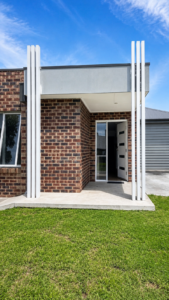
In Victoria, a rooming house is generally a building where rooms are available for rent, and four or more people can occupy those rooms.
Residents may share kitchens, laundries, bathrooms, and other common facilities.
Residents usually have separate agreements with the rooming-house operator rather than signing one joint agreement for the entire property. The operator can generally select new residents without obtaining approval from the existing residents.
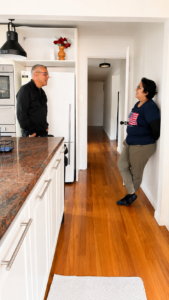
Some rooming houses provide private ensuite bathrooms, while others have shared bathrooms. Rooms may be furnished or unfurnished, and utilities may be included in the rent or charged separately.
A rooming house must be registered with the relevant local council and must meet minimum standards relating to privacy, safety, security and amenity. Students can search the Victorian public register to check whether a property is registered. If you want to know more about rooming houses, please visit our faq section.
Advantages
-
- You generally rent your individual room rather than becoming responsible for the entire property.
-
- You are not normally responsible for another resident’s unpaid rent.
-
- The rooming-house operator must provide important documents, including contact details, house rules, a statement of rights and duties, details of any additional service charges, and confirmation of whether the room is exclusively or jointly occupied. (Consumer Affairs Victoria)
-
- If a bond is collected, it must be lodged with the Residential Tenancies Bond Authority, commonly known as the RTBA.
-
- A properly maintained rental ledger and payment receipts can help you demonstrate your Australian accomodation history.
-
- Many rooming houses offer furnished rooms, which can reduce the initial cost of buying a bed, desk, and other furniture.
-
- Residents may have greater flexibility to leave than co-renters on a joint lease.
Disadvantages
-
- A larger number of residents may share kitchens, laundries, and living areas.
-
- Cleanliness can become an issue if residents do not clean up after themselves or the operator does not arrange regular common-area cleaning.
-
- House rules may regulate matters such as visitors, noise, smoking, parking, and the use of shared facilities.
-
- The quality of the experience depends heavily on how actively and fairly the rooming house is managed.
How much notice must a rooming-house resident give?
A resident without a fixed-term rooming-house agreement generally needs to give the operator at least two days’ notice before leaving.
A resident with a fixed-term rooming-house agreement generally needs to provide at least 14 days’ notice. Leaving without the required notice may mean the resident remains responsible for rent until the notice period expires or another resident moves in, whichever occurs first. (Consumer Affairs Victoria)
Always check the type of agreement you have signed before deciding on your moving date.
3. Share houses and co-renting

Although the expressions “rooming house” and “share house” are sometimes used interchangeably, they are not the same thing.
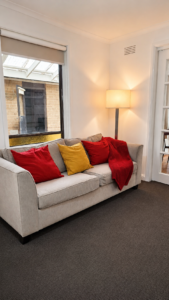
In a typical share house, several people jointly rent an entire property. Each co-renter is usually named on the same residential rental agreement.
Consumer Affairs Victoria explains that co-renters are equally responsible for paying rent and taking care of the property. A co-renter may potentially be held responsible for rent unpaid by another co-renter or damage caused by another person named on the agreement. (Consumer Affairs Victoria)
| Rooming house | Share house |
| Residents usually have individual room agreements | Co-renters usually sign one agreement for the property |
| The operator selects individual residents | Housemates often help select replacement residents |
| Rent generally applies to one room | The total property rent is divided among the co-renters |
| Residents share specified common areas | The property is rented jointly |
| Rooming-house-specific laws apply | General residential rental laws usually apply |
| One resident is generally not responsible for another resident’s rent | Co-renters may be jointly responsible for rent and damage |
This distinction affects your bond, rental responsibilities, notice requirements, and what happens when someone wants to leave.
Advantages
-
- You may have greater freedom in how the household operates.
-
- Housemates can choose a home together and create their own routines.
-
- Rent and utilities are shared.
-
- All co-renters named on the agreement can build a documented rental history.
-
- With compatible housemates, a share house can become a friendly and enjoyable home rather than simply a place to sleep.
Disadvantages
-
- You may be responsible for problems caused by another co-renter.
-
- When one person leaves, the rental provider’s consent may be needed to transfer the agreement or add a replacement renter.
-
- You may need to help find a suitable replacement before leaving.
-
- Household disagreements about cleaning, bills, and visitors are usually matters the housemates must resolve among themselves.
-
- Furniture, appliances, and utilities may need to be organised by the co-renters.
-
- “We will divide the cleaning equally” is a wonderful sentence. Unfortunately, it has defeated many otherwise promising share houses.
A written housemate agreement can help clarify how rent, bills, cleaning, furniture, parking, and early departure will be handled.
4. Renting an entire house or apartment

A private rental gives you exclusive use of an entire house, unit or apartment. You sign a residential rental agreement with the rental provider or property manager.
This option can be more competitive for students who have recently arrived in Australia, particularly where they have limited employment or rental history. However, it is not impossible.
Applicants may be asked to provide identification, evidence that they can afford the rent, employment or income information, and references. Requirements vary between rental providers and property managers.
Advantages
-
- You have substantially more privacy.
-
- You control how the property is used, subject to the rental agreement and Victorian law.
-
- You do not have to share kitchens, bathrooms, or living areas with unrelated residents.
-
- You can establish a formal rental history in your own name.
-
- You have greater control over visitors, cooking times, and household routines.
Disadvantages
-
- Rent, utilities, and internet are not being divided among unrelated residents.
-
- You may need to purchase furniture, appliances, and household items.
-
- Applications can be competitive.
-
- You remain responsible for complying with the rental agreement, property rules and any applicable owners corporation rules.
-
- Inspections, applications and paperwork can take time—sometimes enough time to make you recognise the same property manager at three different Saturday inspections.
5. University and purpose-built student accomodation
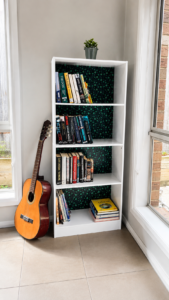
Students may also consider university-managed residences or privately operated student accomodation.
These properties may offer private rooms, studios, or bedrooms within shared apartments. Some include furniture, internet, utilities, study spaces, social activities, and student support services.
Advantages
-
- Properties are generally designed around student needs.
-
- They may be conveniently located near a university campus.
-
- Furniture and utilities are often packaged together.
-
- Social activities can make it easier for new students to meet people.
-
- Management and maintenance processes are usually clearly defined.
Disadvantages
-
- The total weekly cost may be higher than that of renting a room in a suburban property.
-
- Studios and rooms may be smaller.
-
- Agreement dates may be linked to academic periods.
-
- Some students may prefer a quieter or less structured environment.
-
- Availability can be limited near the beginning of a semester.

Author: Ramya Mishra
Ramya Mishra has a professional background in hospitality, with extensive experience in marketing, customer service and grievance resolution. She currently manages and operates rooming houses across Geelong through Goldfig Pty Ltd, drawing on her hands-on experience to support residents and oversee the day-to-day operation of the properties.